

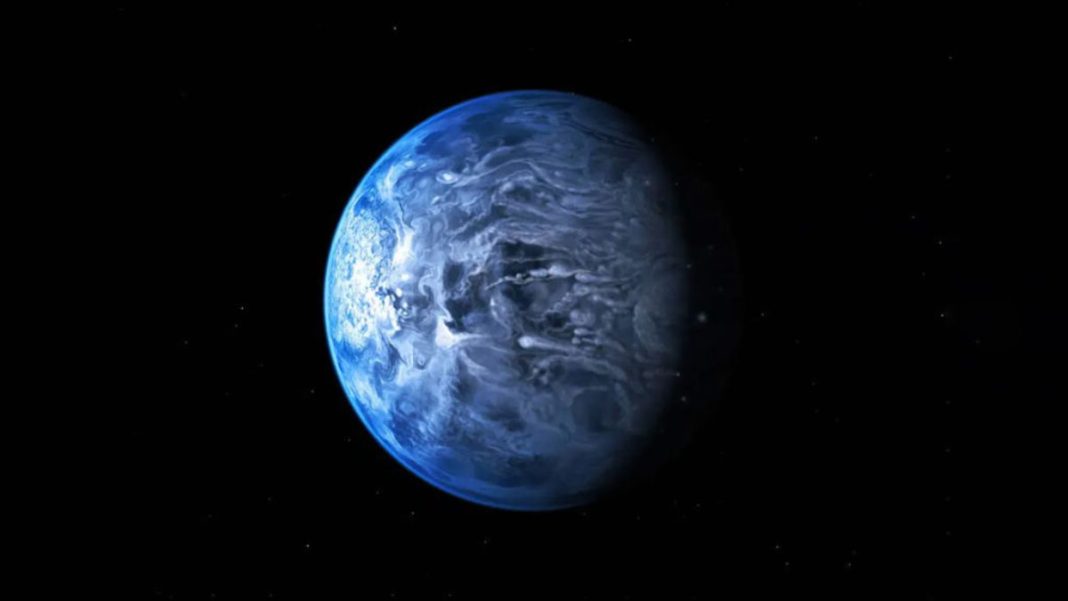

Space headlines love to get weird, but this one is weird for a real reason.
Astronomers say they have identified what may be a new class of planet centered on the exoplanet L 98-59 d, and one of the standout clues is its sulfur-rich chemistry. Researchers say hydrogen sulphide, the gas associated with the smell of rotten eggs, appears to play a major role in the planet’s atmosphere and evolution. The finding comes from a new study led by researchers at the University of Oxford and published in Nature Astronomy.
That is the part that matters most up front. Not just that the planet is nasty, but that it does not fit neatly into the usual categories astronomers use for small worlds. It is apparently neither a normal rocky planet nor a standard water-rich sub-Neptune. Instead, the evidence points to a planet with a permanent global magma ocean, a sulfur-loaded interior, and an atmosphere shaped by volatile sulfur chemistry.
What Planet Did Astronomers Find?
The planet in question is L 98-59 d, an exoplanet about 34 to 35 light-years away orbiting a red dwarf star in the constellation Volans. It is roughly 1.6 times Earth’s size and has an unusually low density for a world of its class, which is one of the reasons researchers think something much stranger is going on inside it.
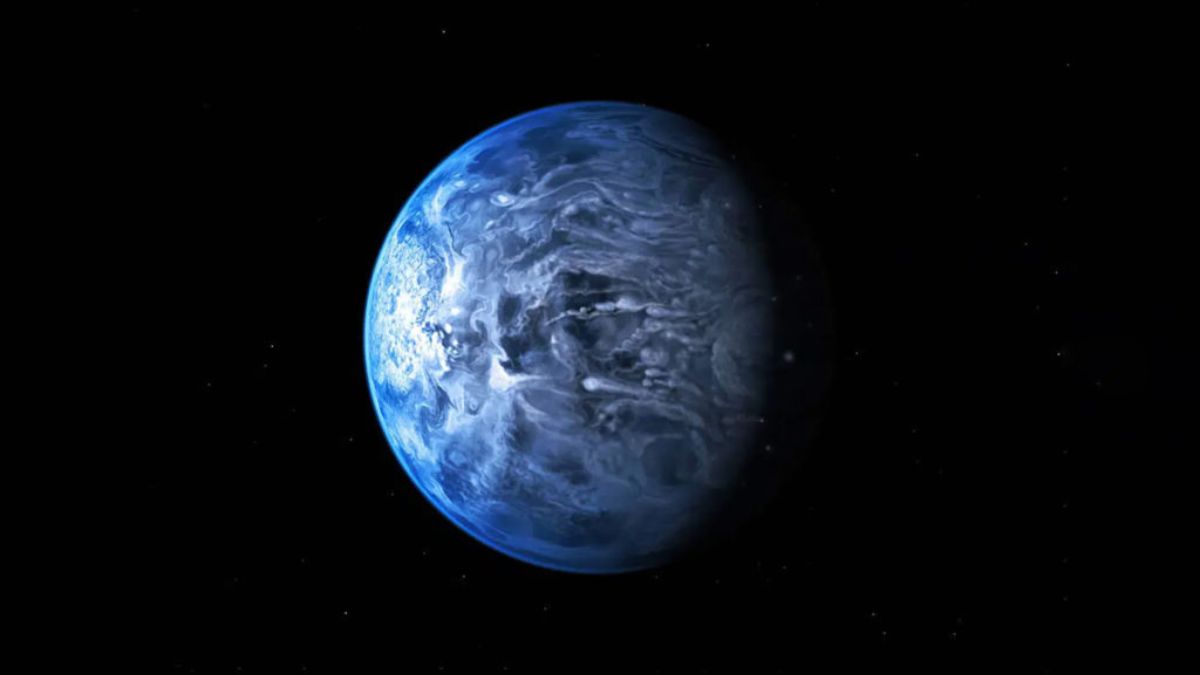
That low density had been puzzling astronomers for a while. Earlier ideas suggested it might be a water-rich world, but the new analysis points in a different direction. The current interpretation is that L 98-59 d is likely a molten or liquid planet, with most of its bulk made up of a deep magma ocean rather than a clearly layered crust, mantle, and core like Earth.
Why Does It “Smell Like Rotten Eggs”?
Because hydrogen sulphide appears to be part of the story.
That gas is strongly associated with the smell of rotten eggs on Earth, and the Oxford team specifically highlighted it as a likely key player in the planet’s atmospheric chemistry and development. Reuters also reported that the atmosphere is rich in sulfur compounds, including hydrogen sulfide, helping explain why the “rotten eggs” comparison keeps showing up in coverage.
One thing to keep in mind, though: no one is literally sniffing the planet. The “smell” angle is shorthand for the chemistry. What astronomers are really talking about is the probable presence of sulfur-bearing gases in a toxic, superheated atmosphere. So yes, the rotten-eggs comparison is fair, but it is still a way of translating atmospheric composition into something people instantly understand.
Why Scientists Think This Could Be a New Type of Planet
This is the actual scientific hook, and it matters more than the smell headline.
According to the study team, L 98-59 d appears to represent a previously unrecognized class of molten planet. The idea is that instead of being a standard rocky world with a thin crust, it may have stayed in a long-term molten state, with sulfur stored and cycled through a global magma ocean. That would make it fundamentally different from the kinds of small planets astronomers usually group together.
In plain English, this planet seems to have been stuck in a hellish in-between state for billions of years. Not a rocky Earth-like world. Not a small Neptune-like gas world. Something stranger. Reuters reported that researchers believe the planet has remained in this molten state for nearly five billion years, with a surface magma ocean and no real solid crust.
How Did Astronomers Figure This Out?
The planet was originally discovered years ago, but the newer breakthrough came from combining James Webb Space Telescope observations with ground-based measurements and computer modeling. The models were then used to test how the planet’s interior, atmosphere, and sulfur chemistry could evolve over time.
That modeling matters because the planet’s current appearance does not make much sense under simpler explanations. Researchers had to work backwards, asking what kind of planet could end up with this size, this density, this much sulfur, and this kind of atmosphere. Their answer was not a standard category. It was a new one.
How Hot and Hostile Is It?
Extremely.
Coverage of the study describes L 98-59 d as having surface temperatures above 1,500 degrees Celsius, and some reports put the estimate even higher depending on the model and location. Either way, this is not a marginally uncomfortable planet. It is a magma world with a toxic, sulfur-heavy atmosphere and no serious case for Earth-like life.
That part should be obvious, but it is still worth saying clearly: this is not a habitable-world story. It is a planetary-diversity story. The value here is not that life could survive there. It is that astronomers are finding worlds that break the old categories and force better models.
Why This Discovery Matters
Because it widens the map of what planets can be.
For years, astronomers have been sorting exoplanets into rough buckets: rocky super-Earths, gaseous mini-Neptunes, water worlds, hot Jupiters, and so on. L 98-59 d suggests the real picture may be messier. Some planets may live in long-lasting molten states with sulfur-rich atmospheres and internal structures unlike anything in our solar system.
That is the bigger takeaway. The universe is probably not just giving us more versions of Earth, Neptune, and Jupiter. It is giving us worlds with chemistry and geophysics that are genuinely alien, and L 98-59 d looks like one of them.
The Bottom Line
Yes, the headline is gross. But the science underneath it is real.
Astronomers say L 98-59 d may be the first clear example of a new class of molten planet, one shaped by a persistent magma ocean and sulfur-rich atmospheric chemistry. And because hydrogen sulphide appears to play a major role, the “rotten eggs” comparison is not just clickbait — it is a crude but fair translation of what the planet’s atmosphere may be like.
What makes the discovery interesting is not that the planet smells terrible. It is that it may represent a whole category of worlds astronomers had not clearly identified before. That is the part worth paying attention to.