

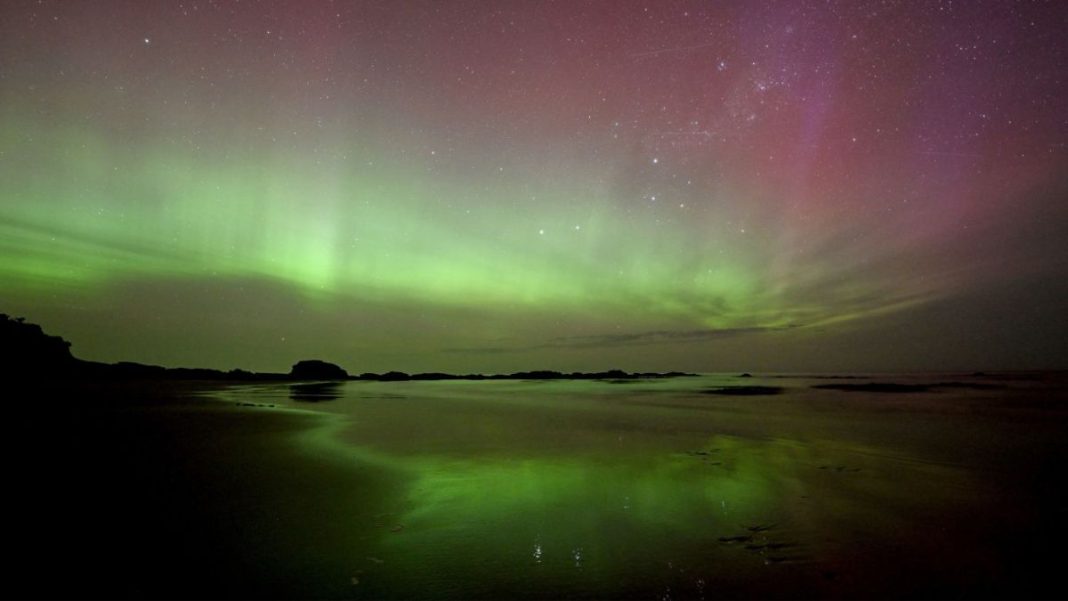

If you have been waiting for another shot at the northern lights, Thursday night may be worth watching.
NOAA’s Space Weather Prediction Center has issued a G2 (Moderate) Geomagnetic Storm Watch for March 19, 2026 (UTC day) because of incoming coronal mass ejections that left the Sun on March 16. That is the core reason aurora watchers farther south than usual are paying attention right now. A G2 storm does not guarantee a show everywhere, but it can push the aurora farther south than it normally appears.
That is the important part up front. Not social media hype, not recycled “sky spectacle” language, but the actual forecast signal: there is an official NOAA watch in place, and that makes the possibility of seeing the lights from places like parts of Illinois a real one. The catch, as always, is that aurora visibility depends on more than the storm category alone. Cloud cover, timing, and local darkness still matter. NOAA’s aurora dashboard is the tool to watch closest as Thursday approaches.
Why the Northern Lights Could Reach Illinois
The reason is simple: stronger geomagnetic activity can expand the auroral oval farther from the poles.
NOAA’s current watch is for a G2 geomagnetic storm, which sits in the moderate range on the agency’s space-weather scale. That level is strong enough to raise the possibility of aurora visibility in more southerly locations than usual, especially in northern U.S. states if conditions line up. NOAA’s alerts page confirms the predicted highest storm level for this event is G2, tied to CME arrivals expected on March 19.
That does not mean all of Illinois is guaranteed to see the lights. That is where people get sloppy. A storm watch is not the same thing as a statewide viewing promise. It means the odds are better than normal, not automatic.
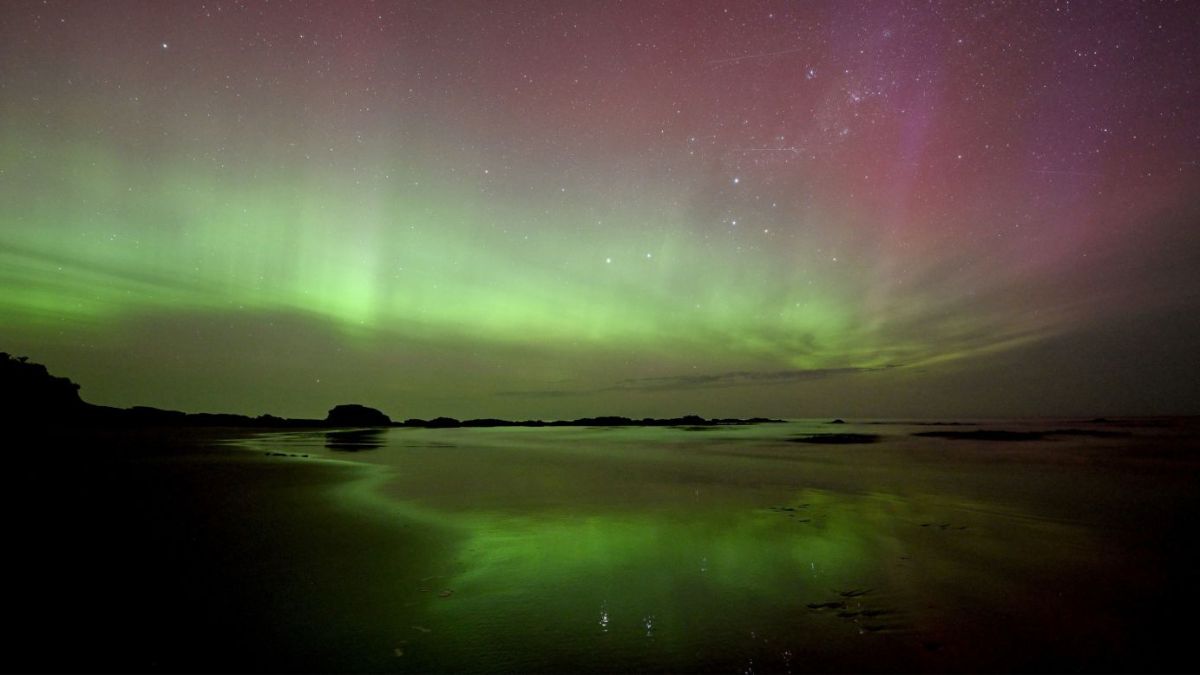
What NOAA Actually Said
NOAA’s March 16 update says a G2 watch was issued for March 19, 2026, specifically because of coronal mass ejections that erupted from the Sun on March 16. The Space Weather Prediction Center’s forecast products also show elevated geomagnetic activity in the near-term forecast window, which supports the watch.
That matters because aurora stories often drift away from the source. In this case, the source is clear: this is an official space-weather watch from NOAA, not just speculation from stargazing accounts.
When to Look for the Aurora
The watch is for the March 19 UTC day, which does not always map neatly onto local evening hours in the United States. For most people in the central U.S., the best approach is to monitor NOAA’s aurora dashboard and short-term updates after dark on Wednesday night into Thursday night, and especially Thursday night, because geomagnetic storm timing can shift as the solar material actually arrives.
This is one of the most common misunderstandings with aurora alerts. People see a date and assume there is a single exact viewing window. In reality, these events are dynamic. The arrival time and strength of the CME determine when conditions are best, and that can move around.
What Could Affect Visibility in Illinois
Even if the storm performs well, local viewing conditions still decide whether you actually see anything.
The biggest issues are:
-
cloud cover
-
light pollution
-
being too far south for the auroral oval’s final position
-
checking too early or too late
For Illinois specifically, the latest forecast shows mostly cloudy to partly sunny conditions on March 18 depending on location, which means sky conditions could still become a real obstacle if clouds linger into the night. A strong storm helps, but clouds can wipe out the view completely.
So yes, the space-weather side looks promising enough to watch. But if the sky is overcast where you are, that can kill the opportunity no matter how good the aurora forecast is.
Why This Storm Is Getting Attention
Partly because geomagnetic storms have been more noticeable lately, and partly because the solar cycle is still active.
NOAA’s solar-cycle tracking shows the Sun remains in an elevated phase of activity, which means more eruptions, more radio blackouts, and more chances for CME-driven aurora events than during quieter years. NOAA also reported an R1 minor radio blackout event from a March 16 solar flare associated with active region 4392, the same general period that produced the CME activity behind the current storm watch.
That context matters because this is not a random one-off out of nowhere. It fits the broader pattern of an active solar cycle producing more space-weather events.
What a G2 Storm Really Means
A G2 storm is not extreme, but it is serious enough to matter for both aurora watchers and some technology systems.
NOAA classifies G2 as a moderate geomagnetic storm. That can bring stronger aurora visibility, but it can also produce limited impacts to power systems, spacecraft operations, and radio/GPS conditions. The main point for most readers, though, is simpler: G2 is strong enough that the lights can sometimes reach much farther south than usual if the event overperforms.
So the “as far south as Illinois” part is plausible. It is just not something you should present like a certainty.
The Bottom Line
A G2 Moderate Geomagnetic Storm Watch is in effect for March 19, 2026, and that gives the northern lights a real chance to push farther south than normal, potentially into parts of Illinois if conditions cooperate. The key word is could. NOAA’s watch is real, but visibility will still depend on the actual storm strength, the auroral oval’s reach, and local sky conditions.