
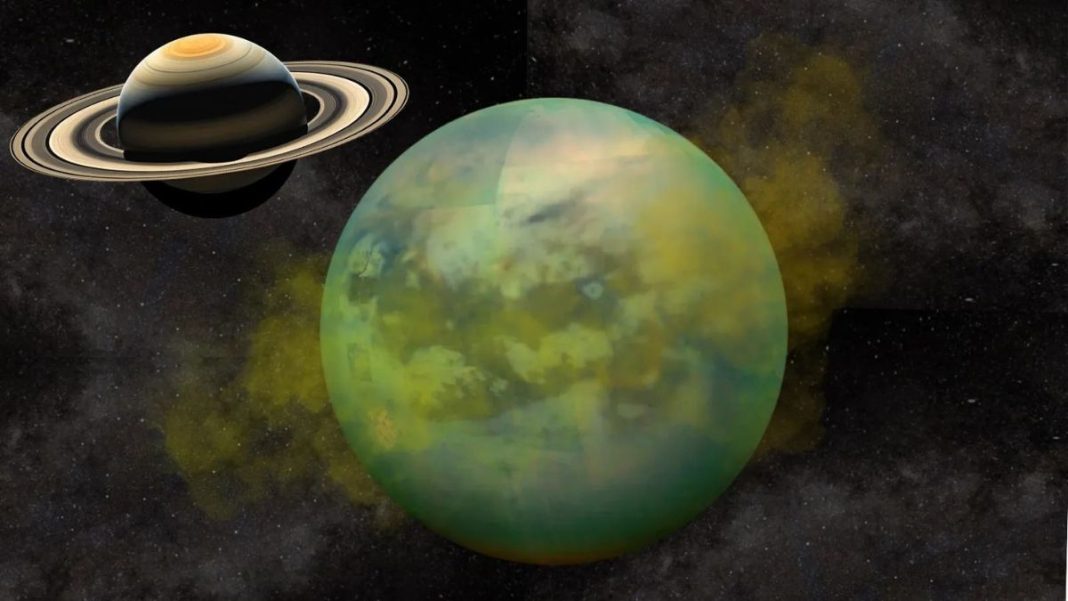

Titan should not make sense as an Earth comparison, but it does.
Saturn’s largest moon is bitterly cold, wrapped in a thick nitrogen atmosphere, and covered with rivers, lakes and seas made not of water but of liquid methane and ethane. Even so, NASA describes Titan as the only place besides Earth known to have stable liquids on its surface, complete with clouds, rain, rivers, lakes and seas. That is exactly why scientists keep looking to Earth for help understanding it.
That is the real starting point. Not pretending Titan is “Earth 2.0,” because it clearly is not, but recognizing that some of the same large-scale processes show up on both worlds. A new 2026 review on terrestrial analogs argues that Earth field sites can still teach us a lot about Titan’s weather, rivers, shorelines, dunes, craters and even its possible subsurface ocean, despite the obvious differences in temperature and chemistry.
Why Earth Is Still Useful for Understanding Titan
A lot of people hear “methane seas” and assume Earth comparisons become useless. That is the wrong instinct.
The point of an Earth analog is not that the materials are identical. The point is that the physics or landscape processes may still be similar enough to study. The 2026 review says Titan and Earth share active rainfall, river erosion, lakes and seas, karst-like dissolution features, dunes, craters and tectonic landforms, even though Titan runs that whole system with methane in a deep-freeze environment instead of water in a warm one. The authors argue that useful Earth-based analog work has been underused, not impossible.
In plain English, Earth gives scientists something Titan does not: direct access. You cannot stand on Titan’s shoreline with a drone, a sediment sampler and a weather station yet. You can do all of that on Earth, then test which measurements and patterns might transfer to Titan. That is one of the main reasons analog research matters.
Titan Has a Hydrological Cycle, Just Not With Water
This is the part that makes Titan so scientifically attractive.
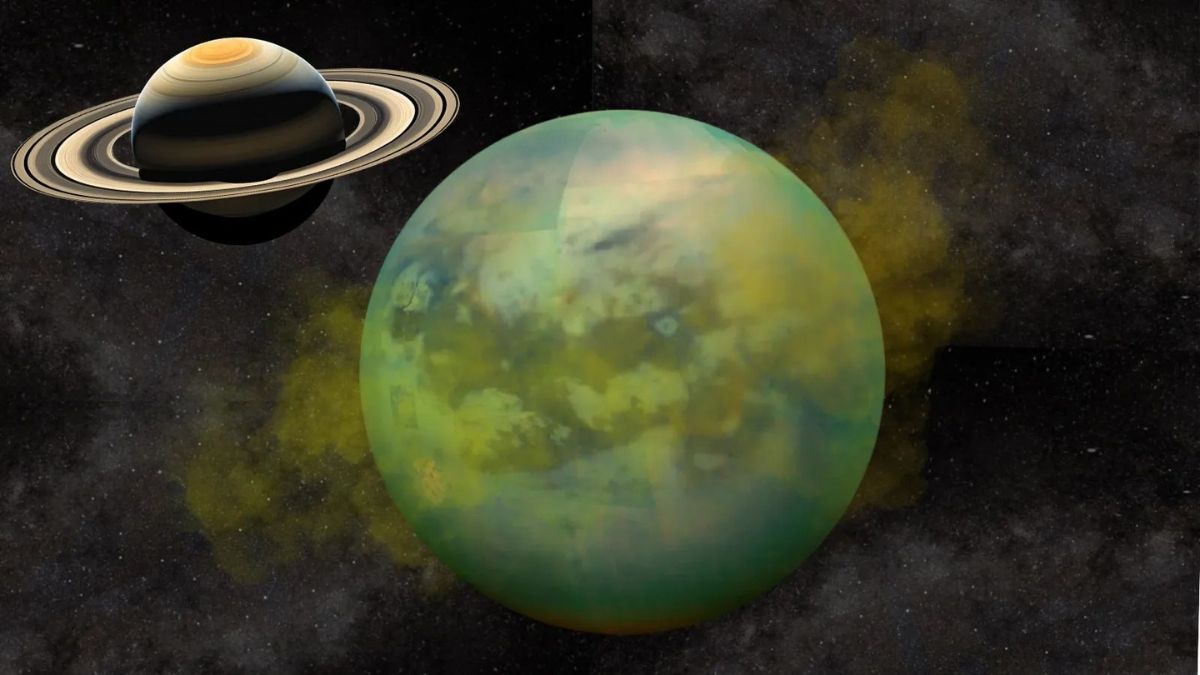
NASA says Titan has clouds, rain, rivers, lakes and seas on its surface, but they are made of hydrocarbons, mainly methane and ethane, not water. Older Cassini-based work and later coverage of Titan’s seas also show that Titan has a full methane cycle analogous to Earth’s water cycle: liquids gather, evaporate, condense into clouds and fall again as rain.
That makes Earth’s rainfall and river systems useful as process analogs. Researchers do not need Titan’s exact chemistry to learn something meaningful about drainage patterns, runoff, shoreline behavior, sediment transport or how repeated rainfall reshapes terrain over time. The materials differ, but the landscape logic can still overlap.
Rivers and Coastlines on Titan May Behave More Like Earth Than You’d Expect
One of the strongest reasons to use Earth analogs is that Titan’s surface features often look familiar even when their composition is alien.
Cassini radar images revealed river networks, lakes and seas on Titan that resemble terrestrial drainage systems in planform and behavior. A 2024 study on Titan’s seas found that the moon’s shorelines, estuaries and large bodies of liquid behave in ways comparable to earthly seas, even though they are made of hydrocarbons. Reuters reported that the northern seas show evidence of tidal motion and changing composition where rivers meet larger basins, which is exactly the kind of thing Earth scientists already know how to study in detail here at home.
That does not mean Titan’s coastlines are simple copies of Earth’s. It means Earth gives scientists a working laboratory for questions about wave action, coastal erosion, inflow mixing and basin evolution that would otherwise stay mostly theoretical until a future mission can measure them directly on Titan.
Earth’s Dunes, Karst and Impact Landscapes Matter Too
Titan is not just about lakes.
The 2026 review argues that Earth analog sites can also help with Titan’s dunes, crater degradation and dissolution-driven landscapes. Titan has vast dune fields and landforms that may reflect erosion and deposition processes shaped by atmosphere, surface liquids and sediment transport. It also has karst-like terrain, where liquids dissolve material and help sculpt the landscape, though the chemistry there is obviously very different from limestone karst on Earth.
That matters because future Titan exploration will not only be about “is there liquid?” It will also be about how the whole surface evolves. Earth analog work lets scientists test how landscapes respond to flow, wind, sediment cohesion, basin infill and degradation over time. That gives missions a better shot at knowing what features are most worth targeting when hardware finally gets there.
Why This Matters for Dragonfly
All of this becomes much more practical once you remember that NASA is actually sending a mission to Titan.
NASA’s Dragonfly mission is a rotorcraft that will explore Titan by making repeated flights and landings across different geologically interesting sites. NASA says Dragonfly will launch in 2028 and spend years studying Titan’s prebiotic chemistry, habitability and surface materials. The mission is designed to travel far beyond a single landing site, which means choosing the right science targets and interpreting what it sees will matter a lot.
That is where Earth analogs stop being abstract and start becoming operationally useful. If scientists already know which Earth environments best mimic Titan-like river systems, dunes, cratered terrain or shoreline processes, they can use that knowledge to sharpen Dragonfly’s science priorities, improve instrument strategies and make better sense of what the spacecraft finds once it begins hopping across Titan’s surface.
The Big Catch: Titan Is Still Not Earth
This part matters, because it is easy to oversell the comparison.
Titan’s atmosphere is denser than Earth’s, its surface is vastly colder, its liquids are hydrocarbons, and its crust is water ice rather than rock in the way we normally mean it on Earth. NASA and the 2026 review both make clear that Titan is only “Earth-like” in selected geophysical and meteorological ways, not in any broad everyday sense. So analog work has limits. It can guide interpretation and mission planning, but it cannot erase the fact that Titan is chemically and thermally alien.
That is exactly why the analog question has to be handled carefully. The goal is not to force Titan into Earth’s mold. The goal is to figure out which Earth environments are good analogs for specific Titan processes and which ones are not. Good analog science is selective, not lazy.
Why This Research Matters
The value of this work is not just academic. It changes how scientists prepare for exploring one of the most complex worlds in the solar system.
Titan is already unusual because it has a thick atmosphere, stable surface liquids and chemistry relevant to prebiotic processes. NASA’s Titan and Dragonfly pages make that clear. The 2026 review adds a more practical point: Earth field studies can fill some of the huge gaps left by sparse spacecraft data and help define better goals for future Titan missions. That means the road to understanding Titan may run through earthly deltas, coastlines, deserts, karst terrain and impact sites first.
That is the real takeaway. Earth is not useful because Titan is secretly familiar. Earth is useful because it gives us the only field laboratory we have for testing the kinds of landscape and atmospheric processes Titan seems to share.
The Bottom Line
Titan may be one of the strangest worlds we know, but it still rewards Earth-based thinking.
Its methane rain, rivers, lakes and seas are alien in composition, yet similar enough in process that Earth can help scientists prepare for what they will find there. That is the argument of the new terrestrial-analogs review, and it lines up with what NASA already says about Titan’s uniquely Earth-like surface-liquid cycle and Dragonfly’s coming mission. The point is not that Titan is just like home. The point is that home may still be the best training ground we have for exploring it.